Travel booking management is everything a travel agency, DMC or tour operator does between the customer saying yes and the trip file being closed: confirming every hotel and vehicle, collecting the deposit and the balance, sending vouchers, checking passports, handling the date change nobody expected, and looking after the traveller until they are home. Winning the booking gets the attention. Running it well is what earns the repeat customer, the referral and the margin you quoted.
This guide walks through the whole travel booking process in eight steps, from the accepted quotation to the closed file. It covers what goes wrong at each stage, what good looks like, how the job differs for retail agencies, DMCs and tour operators running group departures, and when a spreadsheet stops being enough. Along the way you will find a hotel voucher checklist and a pre-departure checklist you can use today, whatever system you run.
What is travel booking management?
Travel booking management is the operational side of a travel business: the process and the system that take a confirmed sale and turn it into a trip that actually happens as promised. It covers six jobs. Holding every service with its supplier, collecting money on a schedule, documenting the trip with vouchers and travel papers, changing it when plans move, supporting the traveller while they are away, and closing the file with the real numbers.
It is worth separating this from two things it is often confused with. A booking engine or GDS is where you search and buy inventory: flights through Amadeus, Sabre or Travelport, hotels through a bed bank or a supplier’s extranet. A lead and sales desk is where enquiries become quotations. Booking management sits after both. It is the record of what you have sold, what you have secured, what you are owed and what the traveller still needs. Our guide to travel lead management covers the front of the journey; this article covers everything after the yes.
Why booking management breaks as an agency grows
Most agencies start by running bookings from an inbox, a WhatsApp group and a spreadsheet, and it works while the owner can hold every trip in their head. Somewhere around the tenth live booking, or the second operations person, the same problems start to appear:
- A hotel was never actually confirmed. The request went out, everyone assumed the reply came back, and the guest arrives to a hotel with no record of them.
- The balance was chased from memory. Nobody had a date in their diary, the reminder went out late, and the agency paid the supplier before the customer paid the agency.
- The voucher no longer matches the booking. The dates moved, the hotel was updated, but the guest is still holding the old voucher with the old dates.
- A passport expires too soon. It was valid on the day of departure and nobody checked it against the six months many countries ask for after the return.
- Changes do not reach everyone. Sales agreed a new date with the customer; operations found out when the hotel called.
- The same work is typed three times. The quotation, the booking sheet and the invoice each hold their own copy of the trip, and they slowly drift apart.
- Nobody knows the real margin. Supplier costs sit in one place, receipts in another, and the profit on the trip is a guess until the accountant reconciles it months later.

None of these is a sales problem, and none of them is solved by working harder. They are gaps in the process, and each step below closes one of them.
The travel booking lifecycle, from yes to closed
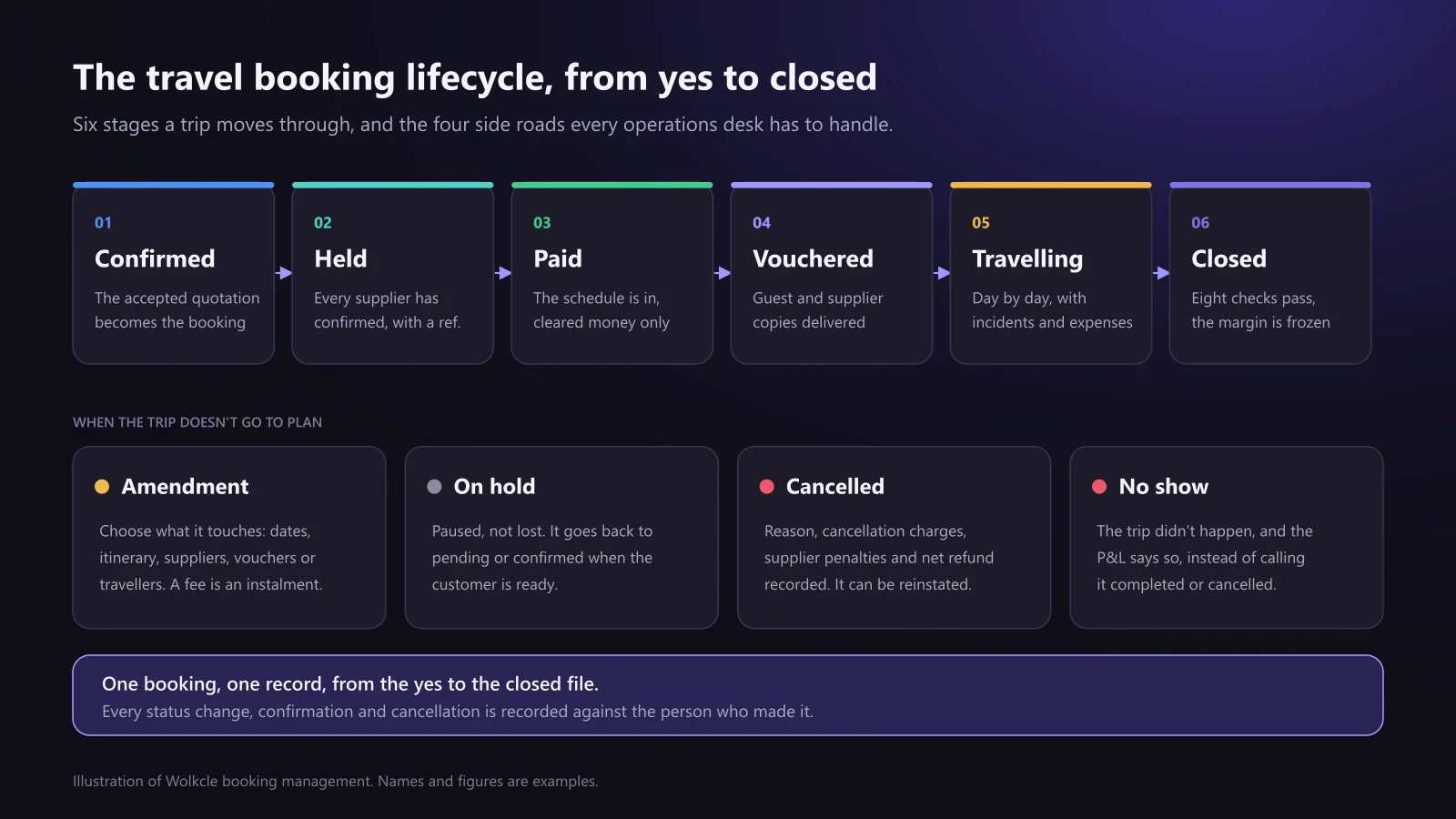
It helps to give every booking a clear status, so anyone on the team can see where a trip stands without asking. A simple travel booking lifecycle has six stages: confirmed (the customer said yes), held (every supplier has confirmed), paid (the schedule is collected), vouchered (the documents are with the traveller), travelling, and closed. Alongside the main road there are four side roads every operations desk has to handle: an amendment, a booking put on hold, a cancellation and a no-show.
How to manage travel bookings: an 8-step process
These eight steps work for a two-person agency and for a DMC operating hundreds of arrivals a season. For each one, we show how Wolkcle’s travel booking management software handles it, so you can see what good looks like in practice.
Step 1: Turn the accepted quotation into the booking
The most common source of booking errors is retyping. The quotation said a Deluxe Lake View room with breakfast; the booking sheet says Deluxe; the invoice says something else again. The fix is simple to state: what was quoted is what gets booked, carried across in one step rather than copied by hand.
In Wolkcle, when the customer accepts, the quotation becomes the booking. The itinerary, hotels, transport, flights, extras, pricing, inclusions and terms all carry over, so nothing is typed twice. If you build your proposals in the quotation builder, the booking starts complete.
Step 2: Confirm every supplier and record the confirmation number
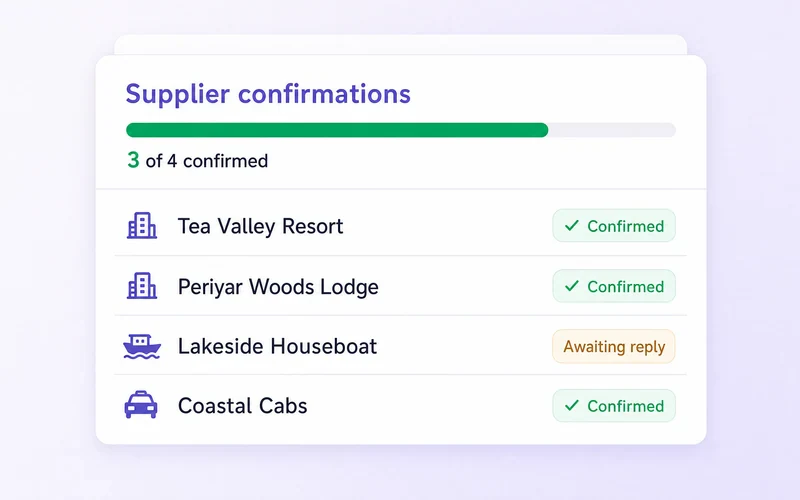
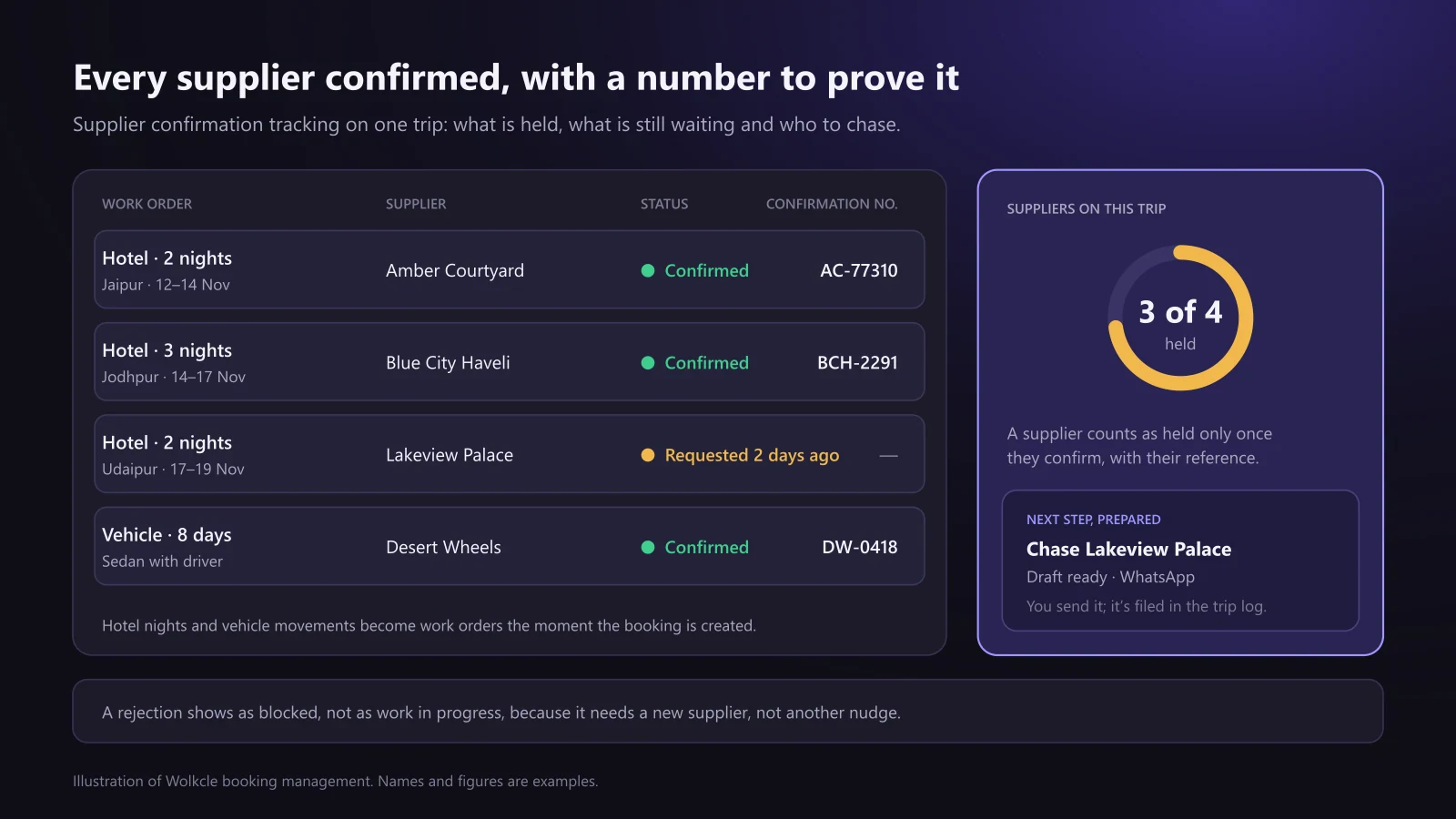
A booking is not secure until every supplier says it is. Good supplier confirmation tracking turns each hotel stay and vehicle movement into its own piece of work: requested, confirmed or rejected, with the supplier’s own reference recorded against it. The reference matters more than it looks, because it is the number the hotel front desk will search for when your guest arrives.
Wolkcle creates supplier work orders from the hotel nights and vehicle lines the moment the booking exists. You request them in one go, record each confirmation number as it arrives, and see at a glance what is still unconfirmed. A supplier counts as held only once they confirm. A rejection shows as blocked rather than as work in progress, because it needs a new hotel, not another reminder. Your supplier rates and contacts live in supplier management, so the request goes to the right person.
Step 3: Put payments on a schedule, not on memory
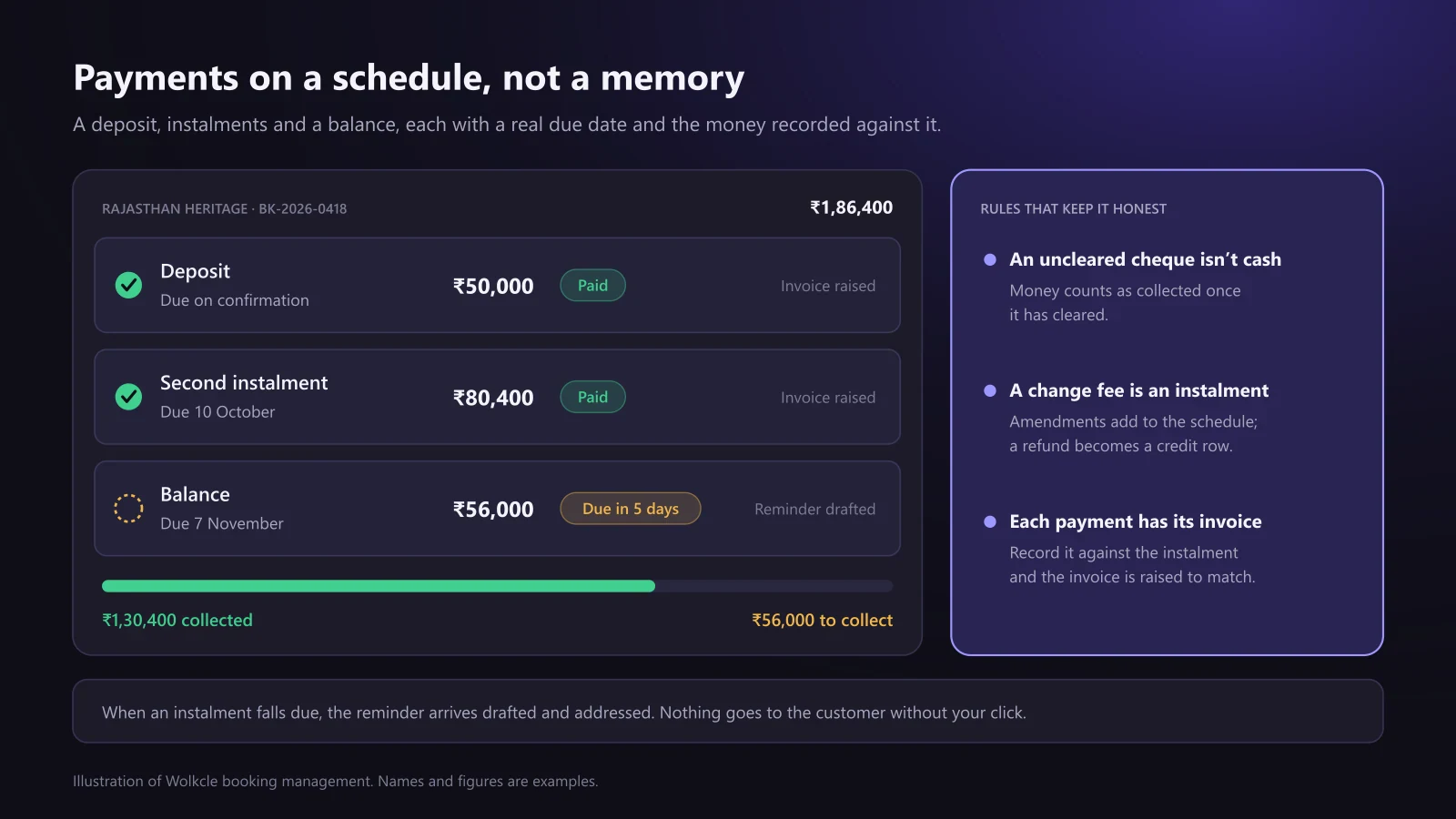
Cash flow in a travel business depends on one habit: collecting from the customer before you pay the supplier. That needs a payment schedule on every booking: a deposit on confirmation, instalments if the trip is large, and a balance due before the supplier deadlines. Each instalment needs a real due date, and every payment needs to be recorded against the instalment it pays.
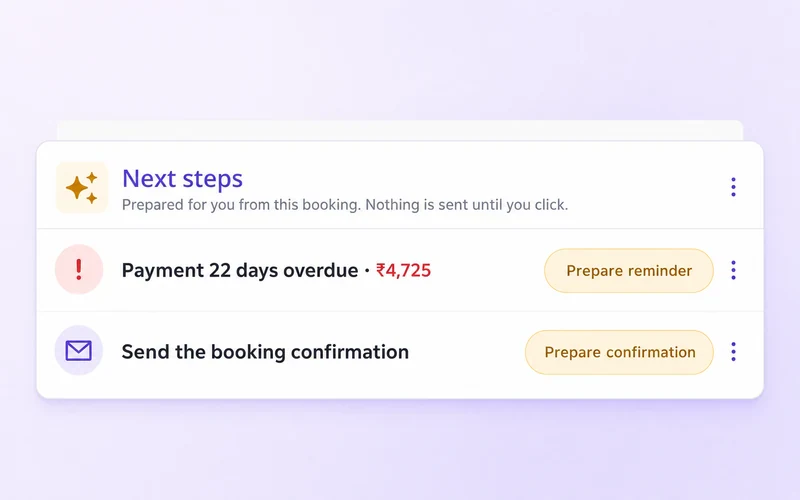
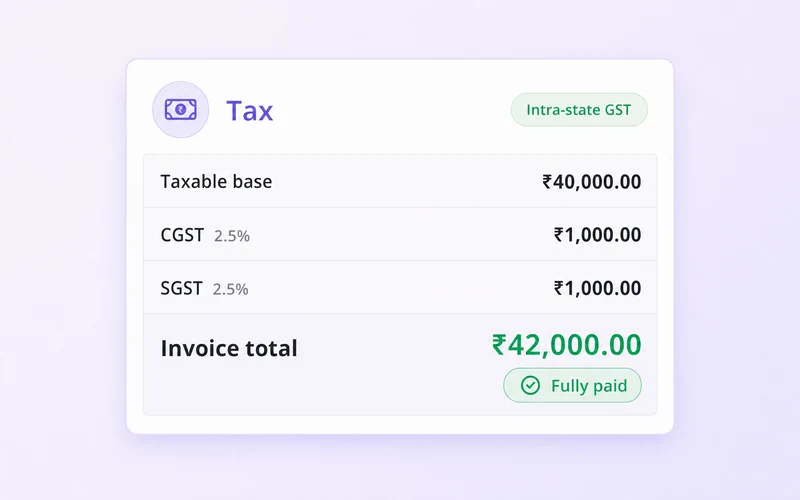
In Wolkcle, instalments carry their own due dates. When one falls due, the payment reminder is drafted for you, addressed from the booking. Record the payment against it and the invoice is raised to match, through invoice management. Two rules keep the numbers honest: money counts as collected only once it has cleared, so an uncleared cheque is not treated as cash, and a change fee becomes a new instalment while a refund becomes a credit row, so the schedule always adds up. The wider picture of receipts and supplier payments sits in cashflow management.
Step 4: Collect and check travel documents early
Documents are where trips fail quietly. A passport that expires two months after the return, a visa that was never applied for, a traveller whose name is spelt differently on the ticket. Collect passport copies and traveller details at booking, not the week before departure, and check them against the rules that apply to the whole trip.
Wolkcle checks passports for six months’ validity past the return date, not the departure date, and shows a refused visa or an expired passport as blocked, because it needs a decision. When details are missing, the request to the customer is prepared for you. Passport numbers stay inside your workspace: the traveller’s own trip page shows names, never passport numbers.
Step 5: Issue vouchers that hotels and guests can trust
A voucher is more than a PDF. It tells a supplier to deliver a service to a named traveller on your account, and it tells the traveller what they are entitled to. Those are two different audiences, which is why a good voucher is written twice: a guest copy without prices and a supplier copy with billing instructions, under the same voucher number.
If you are building your own hotel voucher format for your travel agency, make sure it carries:
- A voucher number that stays the same for the life of the service.
- The hotel’s name and city, and the supplier’s own confirmation number.
- Lead guest name and the number of adults and children.
- Check-in and check-out dates, room type, number of rooms and the meal plan.
- Billing instructions on the supplier copy: what is billed to the agency and what the guest pays directly.
- A rooming list on the supplier copy for group stays, so the hotel can allocate rooms before arrival.
- An emergency contact: your agency’s number for help during the trip.
- No prices on the guest copy. Your costs and margins stay with you.
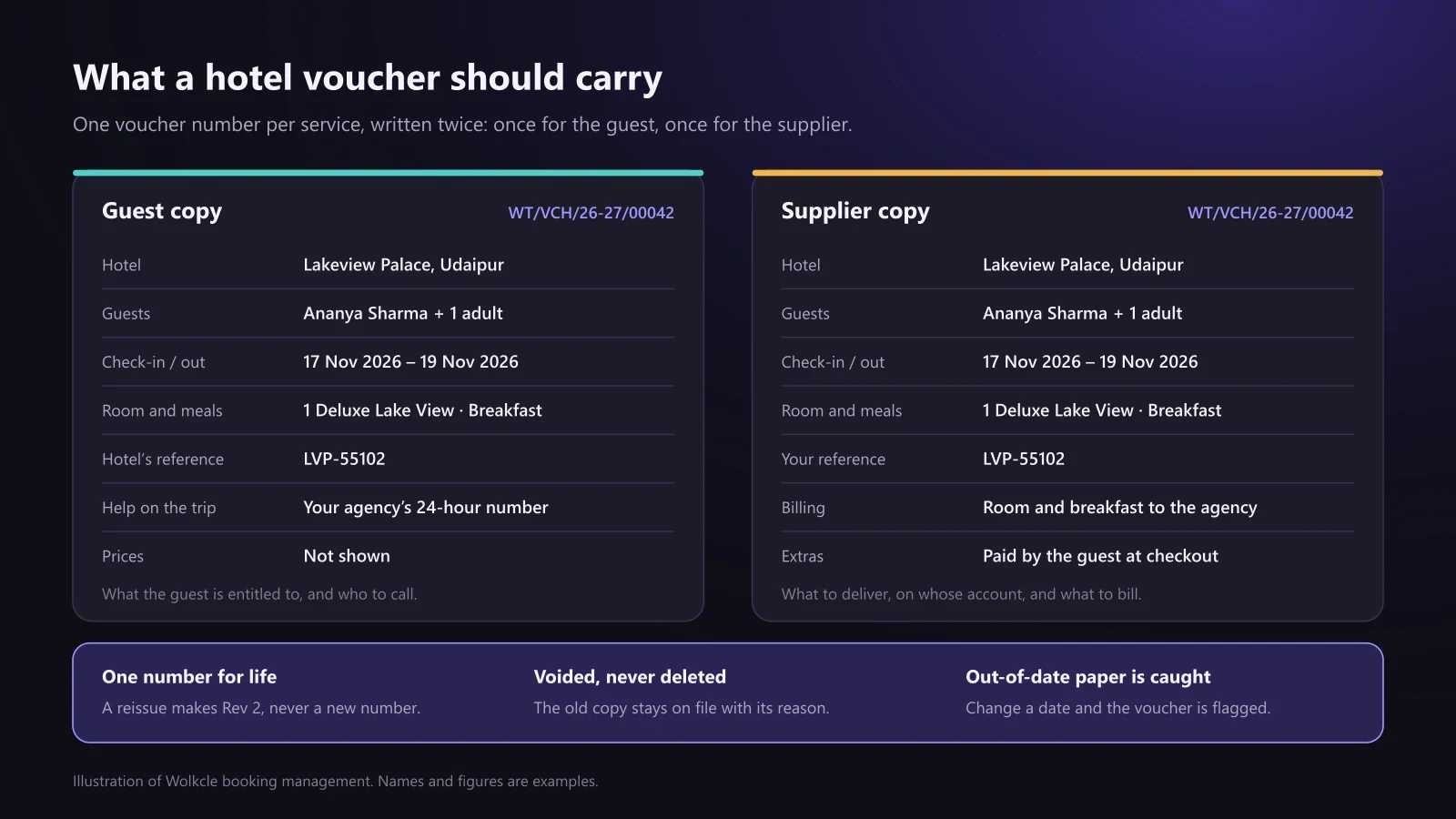
Vouchers also need a lifecycle. In Wolkcle, each service keeps one voucher number for life; a reissue increases the revision and keeps the old copy on file with its reason. Issued vouchers are voided, never deleted. Vouchers wait for the supplier’s confirmation, and issuing one early is recorded with a reason, never done silently. Delivery is tracked by e-mail, WhatsApp, download or by hand, because a voucher that was made is not the same as one the traveller actually holds.

Step 6: Handle changes and cancellations without breaking the file
Changes are where booking management is really tested. A customer moves their dates by two days, and suddenly the hotels, the transfers, the vouchers, the payment schedule and the invoice are all out of step. The safest way to handle a change is to treat it as an amendment: one record that says what changed, what it touches and what it costs, approved before it is applied.
In Wolkcle, you raise an amendment and choose what it touches: dates, itinerary, suppliers, vouchers or travellers. Approving it moves the trip, hotel and itinerary dates, adds new service lines, updates suppliers and flags the vouchers that need reissuing. A fee becomes a new instalment on the payment schedule. Raising an amendment tells the customer nothing; informing them is a step you take, when the new arrangements are ready.
Cancellations need the same discipline. Record the reason, the cancellation charges, any supplier penalties and the net refund, and track the refund until it is paid. Wolkcle keeps all of these on the booking, along with the status the trip had when it was cancelled, so a booking reinstated later goes back to where it was rather than starting again. And when the trip simply does not happen, a no-show status keeps your profit and loss honest, instead of calling it completed or cancelled.
Step 7: Run a pre-departure check on every trip
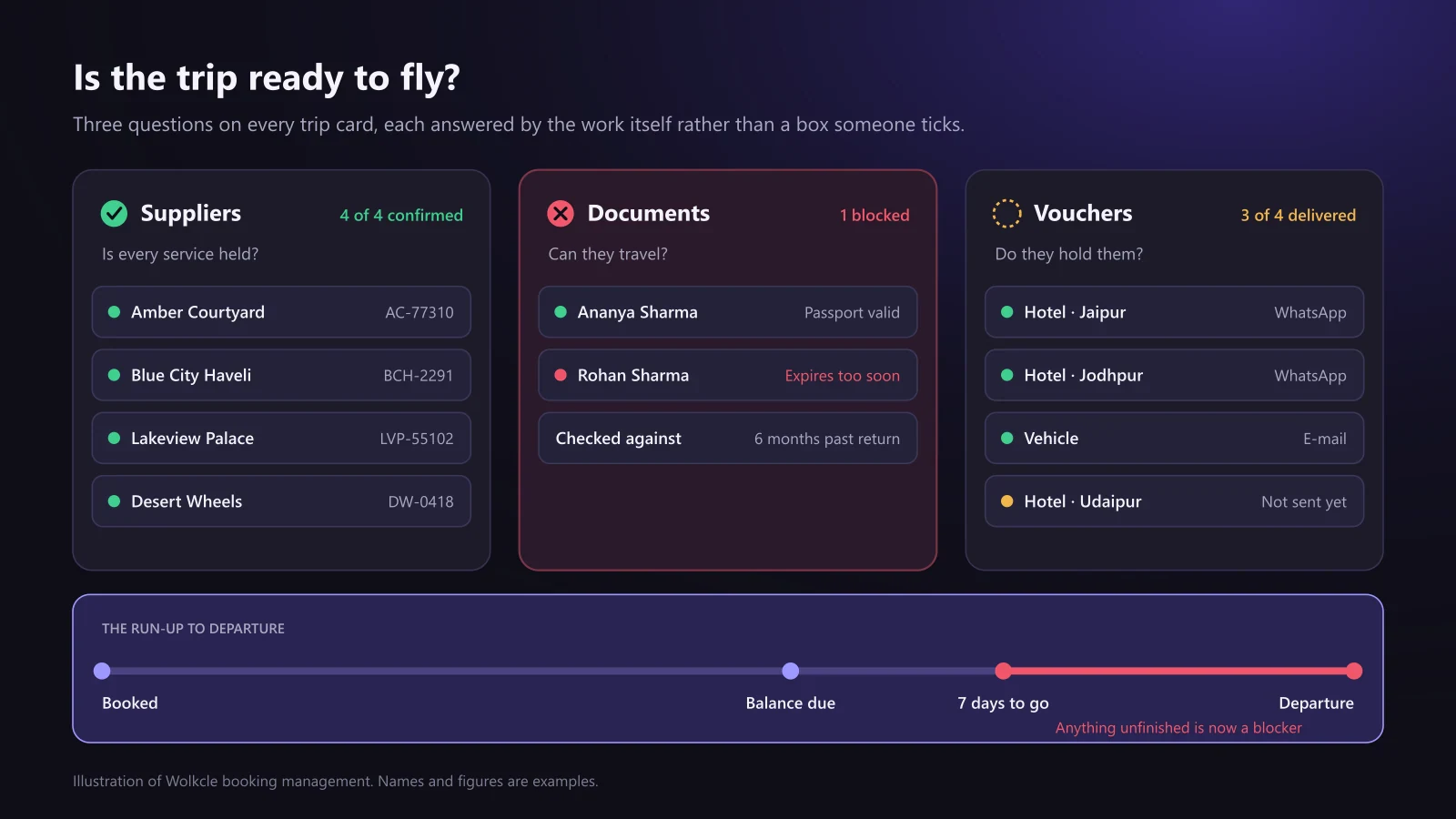
A week before departure, every trip should be able to answer three questions: is every service held, can every traveller travel, and do they hold their vouchers? Here is a pre-departure checklist for travel agents that covers the essentials:
- Every hotel, vehicle and activity confirmed, with the supplier’s reference.
- Hotels reconfirmed within the last few days before arrival.
- Driver and vehicle details received for every transfer.
- The balance collected, and supplier deadlines met.
- Passports valid for six months after the return date, and visas granted.
- Vouchers delivered to the traveller, not just created.
- A pre-departure brief sent: the day-by-day plan, meeting points and your emergency number.
Wolkcle answers those three questions on every trip card from the work itself, not from a checklist someone has to tick: supplier confirmations, the travellers’ documents and voucher delivery each fill one of the three boxes. Anything unfinished in the last seven days before departure is flagged as a blocker. The Next steps desk then prepares what is needed, such as the supplier chase, the payment reminder or the pre-departure brief, ranked by what stops the trip first. You read it, change it if you like, and send it from your own e-mail or WhatsApp; nothing leaves without your click.

Step 8: Stay close during the trip, then close the file
While the traveller is away, your team needs one place to see which day of the trip it is, tonight’s hotel and who to call. When something goes wrong, the incident, what was offered and what the driver spent should be logged on the booking, not in a chat that disappears. Wolkcle keeps all of it, with every call and message, in one trip log. On the Business plan and above, your traveller also gets their own trip page in your agency’s colours, showing their day-by-day plan, what is confirmed, the driver’s details once they are known, and what they have paid and still owe. Your costs, margins and supplier details are never sent to it.
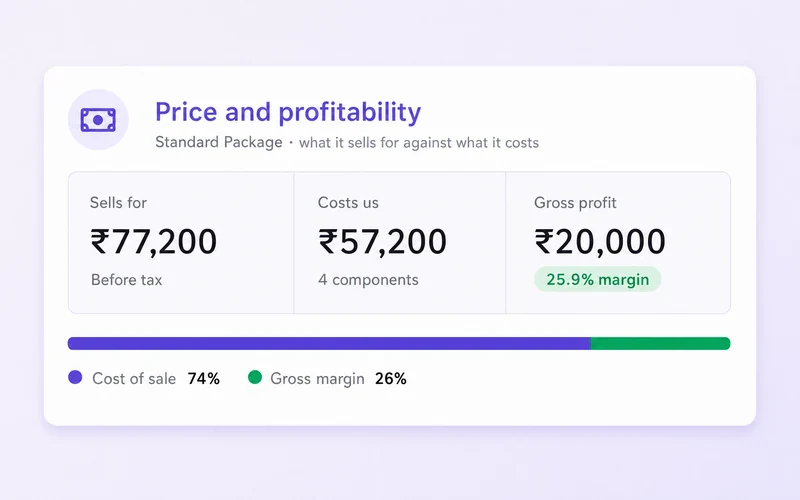
When the trip is over, close the file properly. Check that every supplier is paid, every receipt is in and every refund is settled, then record the final margin. In Wolkcle, a booking passes eight checks before it closes, and the profit and loss is frozen at closure. Tax you collect for the government is neither revenue nor cost, so it never inflates your margin, and a package with no cost lines shows its margin as unavailable rather than a flattering 100%.
Booking management for travel agencies, DMCs and tour operators
The eight steps apply to every travel business, but the weight falls differently depending on what you sell.
Retail and outbound travel agencies
An agency selling holidays to families, couples and small corporate groups handles many FIT bookings (free independent travellers), each one different. The pressure is on documents, payment collection and keeping the customer informed, because the customer is paying from their own pocket and calls when they are anxious. Clear payment schedules and a trip page they can check themselves remove a large share of those calls.
DMCs and inbound operators
A destination management company runs the ground: hotels, transfers, guides and activities for travellers sold by agencies abroad. Its booking management is supplier-heavy. Many work orders per trip, many reconfirmations a day, and driver and vehicle details that have to reach the right people on time. Grouping the same task across every live file is what keeps an inbound operations desk from drowning on a busy arrival day.
Tour operators and group departures
A tour operator running GIT bookings (group inclusive tours) manages one departure with many travellers. The work is in the passenger details, the room sharing, the deposits from each traveller and the documents for the whole group. Keep a rooming list for every hotel, with names, room types and sharing, and send it to the hotel well before arrival; in Wolkcle, the supplier copy of the hotel voucher carries it. Keep a passenger manifest for every coach and flight. Most of all, keep each traveller’s documents and payments against the booking, so the group leader is not carrying the only copy in a folder.

| Travel agency | DMC | Tour operator | |
|---|---|---|---|
| Typical booking | FIT holidays for families, couples and corporates | Ground services for travellers sold by partner agencies | Group departures (GIT), pilgrimages, educational tours |
| Heaviest step | Payments and documents | Supplier confirmations and reconfirmations | Passenger details, rooming and deposits |
| What goes wrong | A late balance, an expired passport | An unconfirmed hotel, a driver with no details | A missing name on the rooming list |
| What to watch | Balances due this week | Unconfirmed services by arrival date | Deposits and documents per departure |
Excel vs booking management software
A travel booking Excel template or a booking tracker in Google Sheets is a reasonable start for a one-person agency. It breaks down at the same point every time: when more than one person works on the same trips, when a booking changes after it is confirmed, or when the owner wants to know what was actually earned. Here is how the two compare:
| Spreadsheet or booking tracker | Booking management software | |
|---|---|---|
| Creating the booking | Retyped from the quotation | The accepted quotation becomes the booking |
| Supplier confirmations | A column someone may update | A work order per service, held only with a reference |
| Payments | Due dates in someone’s diary | An instalment schedule with drafted reminders |
| Vouchers | A Word template, edited for each trip | Guest and supplier copies under one number, tracked to delivery |
| Changes | Overwritten; the old version is lost | An amendment that updates suppliers, payments and vouchers together |
| Readiness | Checked by hand the day before | Suppliers, documents and vouchers shown on every trip card |
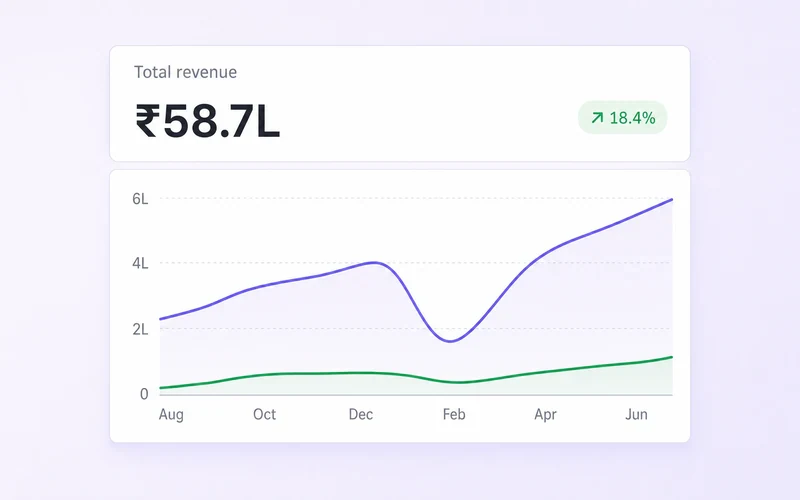
| Margin | Worked out at the end of the month | Calculated on the booking and frozen when the file closes |
| Access | Everyone sees everything, including margins | Each person sees what their role allows |
A quick test: count the bookings departing in the next 30 days and ask how many you could say, without opening anything, are fully held, fully paid and vouchered. If the honest answer is “I’d have to check”, the spreadsheet is already costing you time, and sooner or later it will cost you a trip.
What to look for in travel booking management software
When you compare booking systems for a travel agency, run a real trip from last month through each one rather than the vendor’s demo data. The software should:
- Create the booking from the accepted quotation without retyping.
- Track every hotel and vehicle as its own confirmation, with the supplier’s reference.
- Hold a payment schedule with real due dates, and count only cleared money as collected.
- Produce guest and supplier vouchers, and tell you when one no longer matches the booking.
- Handle amendments and cancellations, including charges, supplier penalties and refunds.
- Show, on every trip, what still stands between it and departure.
- Prepare the messages, but never send to a supplier or customer without your click.
- Keep sales, operations and finance in separate roles, with every confirmation and cancellation signed by name.
- Connect to your quotations, invoices and cashflow, so the trip is one record from enquiry to closure.
Wolkcle does all of these, with fifteen roles across sales, operations, finance and leadership. If you are still choosing a system for the whole agency, our complete guide to travel CRM software covers the wider buying decision, and agencies in the UAE will find VAT and AED specifics in our guide to travel agency CRM in Dubai. Plans are on the pricing page.
The bottom line
Good travel booking management is quiet. Every supplier is held with a reference, every payment has a date, every voucher matches the booking, every passport has been checked, and every change reaches everyone it touches. Travellers never see the work. They just find that the hotel was expecting them, the driver was waiting and nothing went wrong that was not sorted before they noticed. That is what brings them back, and what turns them into your best source of new enquiries.
To see it on your own bookings, start a free 14-day trial. If you would rather be shown around first, book a walkthrough and the team will take you through bookings, supplier confirmations, payments and vouchers using the kind of trips you run.