
Booking Management

Know which trips are actually held.

From the moment a quotation is accepted, Wolkcle tracks every supplier hold, traveller document, instalment and voucher on the trip — and tells you which one is missing before the traveller finds out.

9
booking states, including hold, no-show and closed
11
editor tabs, one per part of the trip
7
roles, so selling, operating and accounting stay separate
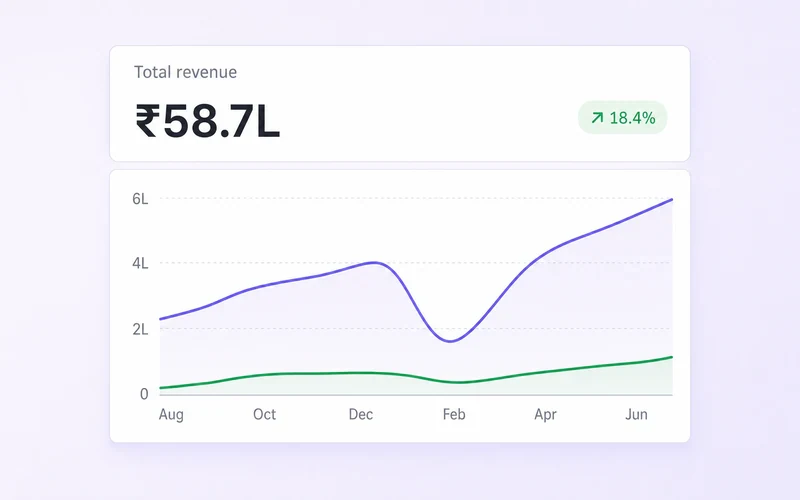
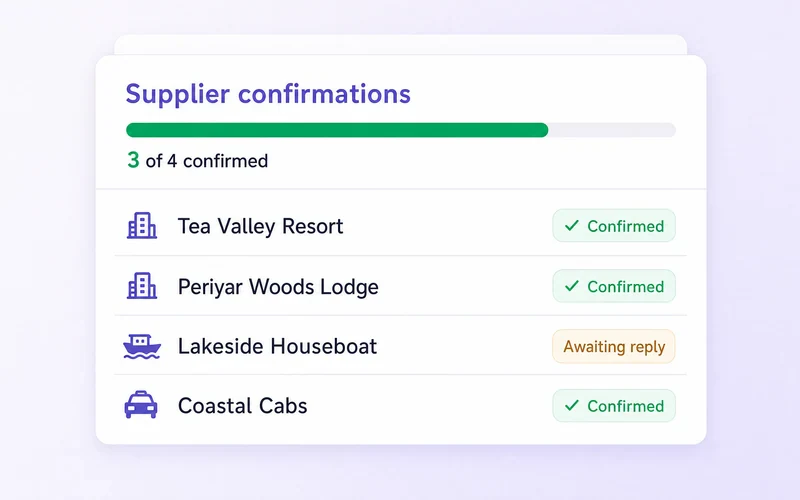
2 nights unheld
Surfaced, not scored away
Inside 7 days
Unfinished work escalates

Illustrative booking. Figures are an example, not a benchmark.

A booking has more than one ending.
All of them are handled.

Most trips run pending → confirmed → ongoing → completed → closed. The ones that do not are where systems usually give up.

01DraftThe trip is being built. Nothing is promised yet.
02PendingHeld, awaiting the decision that commits you.
03ConfirmedA role-gated decision, not a checkbox.
04OngoingAn hourly sweep moves trips in and out on their own dates.
05CompletedThe coach came back. The file is not finished yet.
06ClosedMoney reconciled, suppliers settled, P&L frozen.

Completed means the coach came back. Closed means the file is finished — money reconciled, suppliers settled, issues resolved, P&L frozen. They are separate on purpose. Marking a booking settled and closing it are two different acts.

On hold

The customer has paused. The booking keeps its content and its schedule without pretending to be live.

No-show

Nobody travelled. Not a cancellation, which happened before departure, and not a completion, which claims a trip that never ran. Both put a false story in the P&L.

Cancelled → Reinstated

Cancelling decides a refund, voids unpaid invoices and flags every supplier. Customers change their minds, so a cancelled booking can be reinstated with the reason on the record.

Reopen

A closed booking can be reopened when something surfaces late. The closure, the reopening and the reason are all kept.

Readiness you don’t have to maintain.

Wolkcle does not ask you to tick a checklist. It reads the work itself — the supplier work orders, the document records, the payment ledger, the vouchers — and answers the three questions an operations desk actually asks.

Suppliers

“Is the trip actually held?”

Every hotel night and vehicle movement is a work order with a supplier. Until the supplier confirms it, the trip exists only on your side.

Documents

“Can these people legally travel?”

Passports, visas, insurance, tickets. Your own paperwork — vouchers, invoices, supplier confirmations — is deliberately excluded: it is not what stops someone boarding.

Vouchers

“Does the traveller hold the paper that gets them checked in?”

Generating a PDF is not the finish line. The box turns green when the voucher has been delivered, not when it has been made.

Two rules that make the score trustworthy

A failed thing is not a pending thing.

A rejected supplier, a refused visa and an expired passport are not “in progress”. They need a different decision, so they are surfaced as blockers rather than counted as work still under way. A score that quietly absorbs a rejection is a score you cannot act on.

Time is part of status.

“Two of three confirmed” is routine ninety days out and an emergency four days out. Anything unfinished inside the last week before departure escalates automatically — the same facts, read against the clock.

The same booking, at three points in its life

90 days out
Suppliers4 / 11
Documents2 / 16
Vouchers0 / 9
Nothing is late. Chasing a hotel three months out is noise, and noise is how a desk learns to ignore its own alerts.
7 days out
Suppliers9 / 11
Documents13 / 16
Vouchers4 / 9
The escalation window. The same two open work orders are now blockers, and the rejected hold is named rather than averaged into a percentage.
Departure day
Suppliers11 / 11
Documents16 / 16
Vouchers9 / 9
Held. Every night and every movement carries a confirmation number, and the traveller has the paper in hand.
  • Passport validity is measured to the return — not the departure — with the six-month rule most of Asia, the Middle East and Schengen apply.
  • Visa state is tracked per traveller across the full sequence: not required, not applied, documents received, applied, biometrics scheduled, approved, rejected.
  • Nothing on the readiness record is editable by hand. Each fact is written by the system that owns it — the work order, the document record, the ledger, the voucher.
  • There is nothing to tick. Milestone lists and manual checklists were removed from the product: a checklist that nobody updates is worse than no checklist, because it looks like an answer.
See it on one of your own trips.Bring your next confirmed booking into Wolkcle and watch the three boxes fill as the work lands.

Eleven tabs. One trip.
Nothing retyped.

A booking carries everything the quotation carried, plus everything that happens after it. Each tab owns one part of the trip and feeds the same pricing and settlement engines.

1Overview
2Itinerary
3Accommodations
4Transportation
5Flights
6Additional
7Pricing
8Inclusions
9Terms
10Cancellation
11Internal Notes
TAB 01

Overview — the people and the promise

Customer, trip dates, destinations, party and the traveller manifest. Travellers are named individually with title, age category, passport, visa state and dietary or medical notes. The lead traveller lives on the manifest, not beside it.

Full manifestVisa trackingAge categoriesLead traveller
TAB 02

Itinerary — the day-by-day programme

Carried straight from the quotation and editable throughout. An amendment that moves dates moves the itinerary with them, rather than leaving a programme describing a trip that is no longer happening.

Carried from the quotationMoves with amendments
TAB 03

Accommodations — rooms, nights and provenance

Properties, room configuration, occupancy, meal plan and the nights each room actually covers. Rates carry their provenance, so you can see whether a line was priced from the catalogue or typed in.

Room config4 meal plans5 occupancy typesNight allocation
TAB 04

Transportation — vehicles against the days they run

Vehicles and legs assigned to the days they run, with rate basis and supplier-side extras kept out of the customer price.

Day validityRate basisSupplier-side extras
TAB 05

Flights — sectors on their own footing

Sectors with airline, timing and class, priced and taxed separately from the land package.

Sector-wiseOwn tax treatment
TAB 06

Additional — everything that is not a bed or a seat

Sightseeing, meals, guides and escorts, permits and miscellaneous, each carrying its own cost and its own selling price.

5 categoriesCost and sell per line
TAB 07

Pricing — the component ledger, live

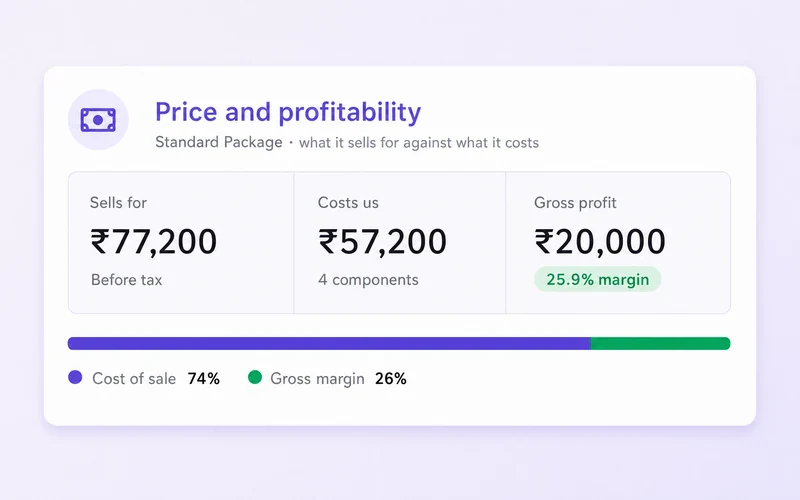
The component ledger, the tax engine and the margin, recalculated as the trip changes. It is the same calculator the closure gate and the post-trip review use.

Component ledgerTax engineMargin
TABS 08 – 11

Inclusions, terms, cancellation policy and internal notes

What the customer is promised, what they are not, what happens if they cancel, and what the team needs to know but the customer never sees. Booking and voucher numbers are generated to your own format, so the reference on the file matches the reference in your books.

Content libraryCancellation policyInternal-only notesConfigurable numbering

A voucher is a service order, not a PDF.

When you build the trip, the hotel nights and vehicle movements become supplier work orders automatically. You chase them, confirm them, and issue the vouchers that hold them — and Wolkcle keeps the paper and the plan in step.

  • Work orders created from the trip. Hotel and vehicle lines become supplier work orders without re-entry, and stay linked to the line that produced them.
  • A real state ladder — draft, requested, on hold, confirmed, rejected, cancelled — with confirmation numbers, cut-off dates and per-supplier notes.
  • Batch confirmation requests, sent and tracked, plus a pending-confirmation queue across every booking — so chasing is one screen rather than twenty.
  • Payment schedules on the supplier side, held separately from supplier invoices: what you have planned to pay is not the same fact as what you have been billed.
Supplier work orders2 open
Trident Udaipur2 rooms · 26–28 Aug · MAP · Conf. TRU-884213
Confirmed
Suryagarh Jaisalmer2 rooms · 29–31 Aug · CP · Conf. JSM-11902
Confirmed
Taj Lake Palace1 suite · 28–29 Aug · cut-off passed
Rejected
Marwar Fleet — Innova CrystaJaipur → Jodhpur → Jaisalmer · 6 days
Requested
Desert Trails — camel safari30 Aug · 4 pax · Sam dunes
On hold
DraftRequestedOn holdConfirmedRejectedCancelled

The supplier confirms; Wolkcle records it. Nothing here is confirmed on the supplier’s behalf.

Two audiences. Two documents. One number.

The supplier files the voucher number on day one. It is allocated once per service and never changes — a reissue bumps the revision and marks the previous one superseded. What each side reads is deliberately different.

ACCOMMODATION VOUCHERGuest copy — carry this to check-in
No. WT/VCH/25-26/00418REV. 2
GuestSharma family · 4 travellers
PropertyTrident Udaipur
Check-in26 Aug 2026 · 14:00
Check-out28 Aug 2026 · 11:00 · 2 nights
Rooms2 × Deluxe Lake View · double · MAP
ConfirmationTRU-884213
24×7 deskYour agency, not the supplier
No rates, no supplier terms, no billing instructions. The guest copy carries none of the money and all of the logistics.
ACCOMMODATION VOUCHERSupplier copy — billing instructions attached
No. WT/VCH/25-26/00418REV. 2
SupplierTrident Udaipur
Your ref.TRU-884213
Stay26–28 Aug 2026 · 2 nights · MAP
Rooms2 × Deluxe Lake View · double
Net rate₹18,400 per room-night
Payable₹73,600 · 15 days from check-out
Bill toThe agency — not the guest
Rev. 1 superseded on 12 Aug after a date amendment. The previous copy is voided with its reason, never deleted.

Issuance discipline

Staleness is detected

Each voucher is fingerprinted at issue. Move a date or swap a room and Wolkcle tells you the paper in the traveller’s hand no longer matches the booking. It flags the voucher; it does not silently reprint it.

Issuance is checked before it happens

By default a voucher will not issue against an unconfirmed supplier or a missing confirmation number. You can override — operations sometimes has to — and the override and its reason are written onto the voucher itself.

Delivery is tracked, because generating is not delivering

Email, WhatsApp, manual hand-off or download — the channel is recorded against the voucher. Consolidate when it helps: one combined document for the whole trip, transport grouped by supplier, or a standalone itinerary voucher.

Documents

Multi-file upload across fifteen document types in four groups — traveller documents, booking documents, operational documents and everything else — with verification status, full-screen preview and completion analytics. Images and PDFs up to 50 MB.

Traveller — 4 typesBooking — 8 typesOperational — 2 typesOther — 1 typeJPEG, PNG, WebP, PDFVerification status

Illustrative trip page. Figures are an example.

Give the traveller their trip, not your phone number.

Every booking gets a private link. Your customer opens it on their phone and sees their itinerary, their hotels, their transport, their travel dates and exactly what they have paid and what is still due. It is read-only, it is revocable, and it stays available for ninety days after the trip ends — because people need their vouchers and payment records after they get home, not just before they go.

  • Private by possession. The link carries a 192-bit random token. There is no account for the customer to create and no password to reset.
  • Whitelisted, not filtered. Cost prices, markups, commission, supplier identities and amounts, internal notes and the P&L are never sent to the page — not hidden on it, not sent to it.
  • Traveller privacy is enforced. Only names and age categories appear, so travellers can check ticket spelling. Passport, visa, medical and dietary details never reach an unauthenticated page.
  • Read-only by design. There are no public write endpoints at all — and you can revoke and re-mint the link at any time.
Never sent to the customer page
Cost pricesMarkupCommissionSupplier namesSupplier amountsInternal notesP&LPassport & visaMedical & dietary

Record the change, or actually make it.
Wolkcle does both.

A date moves. A traveller drops out. The customer adds a day tour. Most systems let you write that down and charge for it — and leave the itinerary, the supplier work orders and the vouchers describing the old trip.

You decide what it touches.

An effects switchboard lets you apply the dates but skip the manifest, or resync suppliers but hold the vouchers. The choice itself is recorded, with an author and a timestamp — a decision to change nothing is a decision, not an absence.

  • The change is applied, not just logged. Approving a date change moves the trip dates, the accommodation dates and the itinerary days. Adding a service creates a real booking line — in the itinerary, on the supplier work orders, on the voucher and on the customer’s page — rather than a charge with a paragraph attached.
  • Every effect reports back. Dates can move while a supplier sync fails and the manifest is deliberately skipped. All three facts are kept, separately, with the error if there was one.
  • Money moves with it. An approved charge becomes an instalment on the payment schedule. A credit — a dropped traveller, a downgraded room — becomes a negative row, so the schedule still sums to the contract value.
  • Telling the customer is a separate act. Creating an amendment sends nothing. Informing them, and asking them to accept, are two distinct workflows behind a preview — and consent is recorded apart from notification.
AMD-0007 · Date changeApproved
Trip and itinerary datesShift the whole programme by two days
Applied
Accommodation datesRe-date every room block on the booking
Applied
Supplier resyncDesert Trails declined the new dates — work order returned to requested
Failed
Traveller manifestSkipped by Priya S. · 12 Aug, 14:20 · party unchanged
Skipped
Voucher flag4 vouchers marked for reissue — nothing reprinted automatically
Flagged

Five effect kinds, five separate results. A partial success is reported as a partial success.

Nine kinds of change, four categories

Date changePassenger changeService additionService removalService upgradeService downgradeSupplier changeEmergency expenseOther

Categorised as accommodation, transportation, additional service or miscellaneous. Amendments can require approval, or auto-approve where they do not. Vouchers are flagged for reissue by default — deciding to reprint is a person’s job.

While they’re travelling.

Which day of the trip it is, which property they are in tonight, and who to ring — every one of those restated from stored data, never guessed. When the system does not know which hotel covers tonight, it says so rather than inferring one from the destination.

WT/BK25-26/00312 · Day 4 of 7Ongoing
Tonight: Suryagarh, Jaisalmer · Conf. JSM-11902 · front desk on file
On the road: Jodhpur → Jaisalmer · Marwar Fleet · Innova Crysta
29 Aug — not available. No accommodation line covers that night. Wolkcle will not infer a hotel from the destination.

The blank is the feature. A confident-looking guess is what gets a traveller sent to the wrong lobby.

A minibus crossing the Rajasthan desert at dawn
Booking calendarNever paginated
JUL 2026
SMTWTFS12345678910111213141516171819202122232425262728293031
AUG 2026
SMTWTFS12345678910111213141516171819202122232425262728293031

Built on an overlap query: a trip running 28 July to 5 August appears on both months. A half-drawn month is a wrong month, and the agent has no way to tell.

An incident desk

Issues raised against the trip across eleven categories — transfer, accommodation, flight, activity, health and safety, documentation, supplier, weather, billing, conduct, other — with severity, owner, the day of the trip it happened on, and whether the customer has been told. An unresolved critical incident blocks closure.

11 categories4 severitiesBlocks closure

On-trip expenses, and recovery done properly

What the guide spent, in ten categories, with who fronted it, how it was paid, proof attached, and an approval step. Recorded is not the same as approved, and only the right ones reach the P&L. An expense the customer agreed to bear moves through a recovery lifecycle — billable, invoiced, collected or written off — and the billing happens through an amendment, so it lands on the ledger rather than in a note.

10 categoriesApproval step5 recovery states

One trip log

Every contact and every issue in a single panel, in the order they happened, so the story of the trip reads as one thread. Calls, emails, WhatsApp messages, texts and face-to-face conversations are all recorded against the trip with direction, priority and whether they are resolved — including the ones that happened outside the system, which is most of them.

Contacts and incidents togetherA record of contact

One P&L. Every screen agrees with it.

The margin on the booking card, the number in the closure gate, the frozen settlement and the post-trip review all come from one calculator. They cannot contradict each other, because there is only one of them.

Collection that reflects what actually cleared.

  • An instalment schedule with real due dates — immediate, or a set number of days before departure, or a date you choose — with percentage or fixed amounts.
  • Payments recorded against the instalment, across nine methods including UPI, card, bank transfer, cheque and gateway, with reference numbers.
  • An uncleared cheque is not cash. Money that has not cleared is not counted as collected.
  • Invoices raised on payment. Paying an unbilled instalment raises the invoice automatically, so the ledger and the paperwork stay in step.
  • Credits are representable. An amendment that reduces the contract produces a negative instalment rather than an impossible one.

Bookings carry their own base currency, with customer-currency presentation where the two differ. Rates are the ones you enter.

Settlement — WT/BK25-26/00312Tax-exclusive
Revenue
Package value₹3,52,000
Amendment — Udaipur day tour₹13,600
Revenue₹3,65,600
Cost
Accommodation₹1,68,000
Transportation₹52,400
Flights₹41,300
Sightseeing, guides & permits₹19,800
On-trip expenses, approved₹7,700
Cost₹2,89,200
Profit — 20.9% margin₹76,400
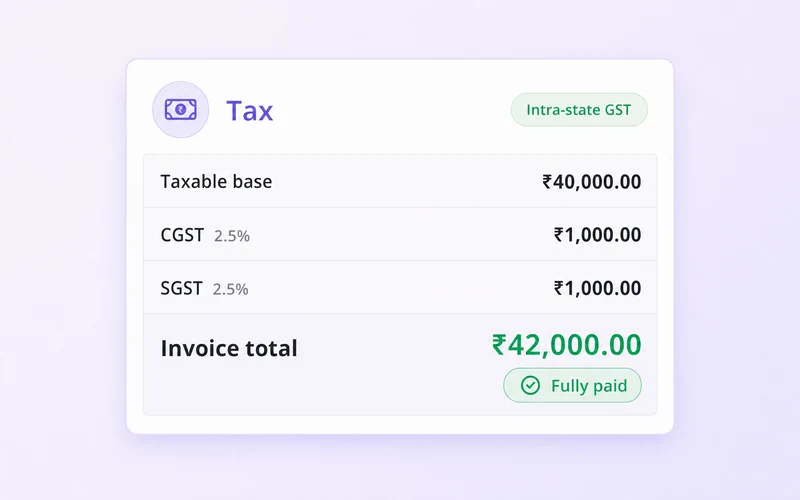
Tax collected: ₹18,400. Invoiced to the customer at ₹3,84,000 and remitted in full. It is neither revenue nor cost, and it does not touch the margin.

Illustrative booking. The arithmetic is the engine’s, not the marketing team’s.

Three planes. Never blended.

Position, cash and exposure answer three different questions and never borrow each other’s numbers. Blending them into one adjective is exactly what lets a wrong number look plausible.

Position

What the trip is worth and what it costs, on an accrual basis. Margin lives here and nowhere else.

Revenue₹3,65,600
Cost₹2,89,200
Margin₹76,400

Cash

Money that genuinely moved. Not what was invoiced, not what was promised, not a cheque still in the drawer.

Received₹3,60,000
Paid to suppliers₹2,41,000
Net cash₹1,19,000

Exposure

What is still to come in and out — and whether you are funding the trip out of your own pocket.

Customer balance in₹24,000
Supplier and expense out₹48,200
You are funding₹24,200

It refuses to flatter you.

Every figure carries its basis. When there are no supplier invoices, the cost side is the package’s own cost prices and the response says so. And when a package carries no cost lines at all, the margin is not reported as 100% — it is reported as unavailable, with the reason. The previous implementation reported a 100% margin on almost every booking. That is why it was rewritten.

Closing a trip is a gate, not a button.

Before a booking can be closed, Wolkcle runs eight checks and tells you which ones failed and by how much. You see the shortfall, not just the red light.

Closure check — WT/BK25-26/003124 of 8 failing
Trip is completeReturned 1 Sep
Customer balance outstanding₹24,000 due
Supplier payments outstanding₹40,500 · 3 suppliers
Unresolved items on the fileNone
Expenses awaiting approval2 expenses
Billable expenses never recovered₹3,200
Incidents still open1 · moderate
Booking is closing at a lossMargin ₹76,400
Closure blocked. Each blocker carries the figure or the count behind it, so the next action is obvious.
  • Closing freezes the P&L. The settlement snapshot is taken at closure, from the same calculator every other screen uses, so the number someone signed off cannot drift afterwards.
  • A closed booking is locked. Content edits stop. The file is finished.
  • Marking settled is not closing. Reconciling the money and shutting the file are two different acts, and Wolkcle keeps them apart.
  • Reopen when something surfaces late — with the reason, the author and the prior status all retained.
Close your next file with a margin you can defend.Walk one live booking through the gate with us, on your own numbers.

What the trip actually earned,
and what is still hanging.

The financial review is the conversation you have with yourself after the coach pulls away: did that trip make money, is the money in the bank, and is anything still outstanding?

A margin bridge, not a number.

Not “you made ₹76,400”, but where the quoted margin went — the hotel that invoiced above the priced cost, the billable expense nobody billed on, the amendment that was collected.

  • Collection timing. Whether the balance cleared before departure, and how long the agency funded the trip out of its own pocket.
  • Per-service contribution and unit economics — per traveller, per night — and a clean null where the party size or night count is unknown, rather than a confident-looking number.
  • Customer feedback and NPS, captured against the booking after return.
  • A reminder for the balance that survives the airport. Payment chasing normally stops at departure. Post-trip balances get their own reminder, because that is the money agencies most often lose.
Margin bridge−₹6,000
Margin quoted at conversion₹82,400
Trident Udaipur invoiced above the priced cost− ₹8,000
Udaipur day tour added by amendment, and collected+ ₹5,800
Billable expense nobody billed on− ₹3,200
Guide overtime absorbed on day 5− ₹600
Margin at settlement₹76,400
The chase list4 open
₹24,000 customer balance, still uncollected 12 days after return.
₹3,200 billable expense never invoiced — bill it through an amendment.
₹40,500 owed to 3 suppliers.
Per-room contribution: not available — occupancy is unset on one accommodation line. Per traveller ₹19,100; per night ₹12,733.

The desk tells you what is due.

Across every booking, Wolkcle surfaces the work that needs a person today. Each one is scored by urgency and carries the action that resolves it. These are catalogue-driven rules reading your own data — not a prediction.

Departure approachingTrips leaving inside the escalation window.
Suppliers unconfirmedWork orders still requested or on hold.
Vouchers not issuedConfirmed services with no paper against them.
Documents expiringPassports and visas that will not survive the return date.
Incidents openIssues raised on the trip and still unresolved.
Trips overrunningBookings past their end date and still ongoing.
Amendments awaiting approvalChanges recorded but not yet decided.
Files ready to closeTrips that clear the gate and are waiting on a person.

And you can just ask.

The assistant works on the booking in front of it. Ask it to confirm a booking, record a payment, chase a supplier or walk you through a cancellation — and every write is previewed and confirmed by you before anything changes. Nothing is written on your behalf.

“Confirm the Sharma booking and set the balance due seven days before departure.”
“Record ₹60,000 by UPI against instalment 3.”
“Which suppliers on August departures are still unconfirmed?”
“Walk me through cancelling WT/BK25-26/00287.”
9
booking states
8
named closure blockers
9
amendment types, 5 effect kinds
11
incident categories, 4 severities
90
days the customer link stays live after the trip

Selling, operating and accounting are different jobs.

Seven roles, gated at the route, so the person who books the trip is not necessarily the person who cancels it, and the person who runs it is not necessarily the person who sees the margin.

RoleWhat it is for
OwnerUnrestricted.
AdminSystem-wide settings, templates and configuration.
Sales managerLifecycle decisions — confirm, cancel, reinstate, close, reopen — plus content and finance.
Travel consultantBuilds and edits bookings and quotations. No lifecycle decisions, no finance.
OperationsSupplier confirmations, vouchers, dispatch, operational notes, starting and completing trips. Not the money.
AccountantPayments, refunds, schedules, supplier payables and the financial views. Not the trip content.
ViewerRead-only.
  • Every booking is scoped to your organisation. Tenant isolation is enforced at the query, not the view.
  • Every change is attributed — who confirmed, who cancelled, who closed, who overrode a voucher check.

It starts from an accepted quotation.

Booking management is one module of the operations desk. The quotation becomes the booking without re-entry, the instalments become invoices, and the settled file feeds the numbers you report on.

Ready to see which trips are actually held?

Bring your next confirmed booking into Wolkcle. Chase the suppliers, issue the vouchers, and close the file with the margin you can defend.

Chat with us